

STORY BY – ADAM PENGILLY (WEEKEND AUS)
Others were hogging the headlines when Torrie Lewis became Australia’s fastest woman (while she was still a teenager). How far and how fast can the girl from Newcastle go?
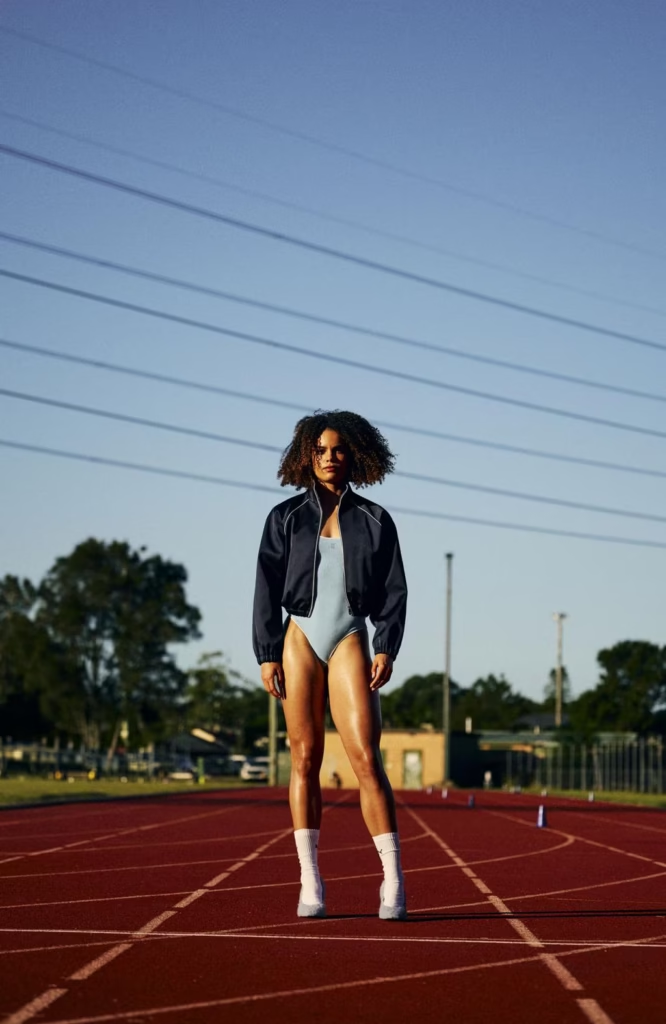
On a mild and greying afternoon in southern suburban Sydney, the fastest Australian woman to set foot in an athletics arena is bouncing off a tired public track she’s never set foot on before today.
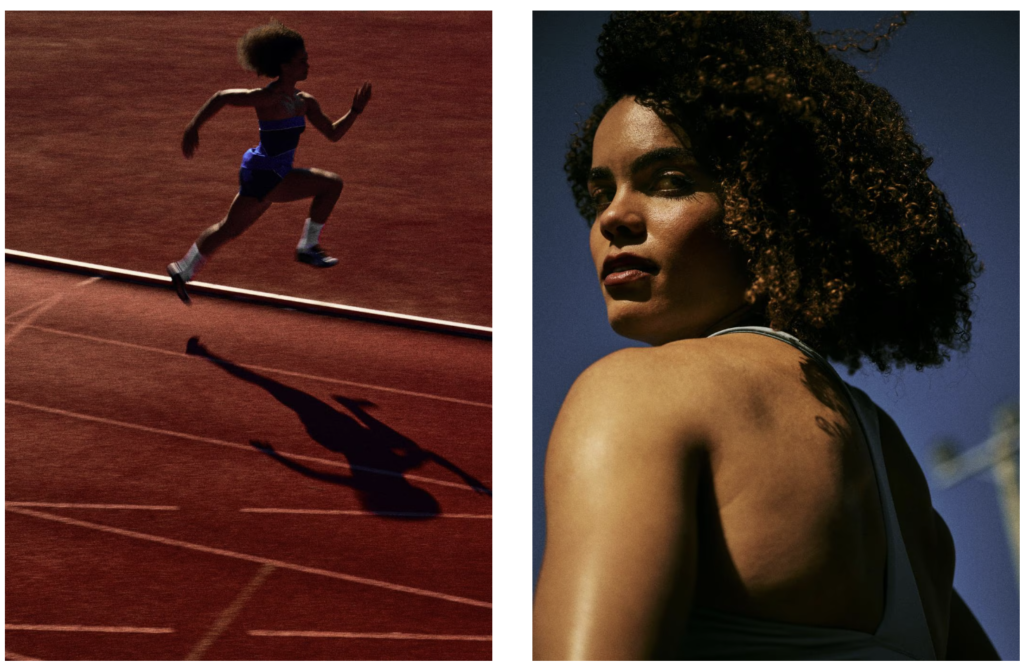
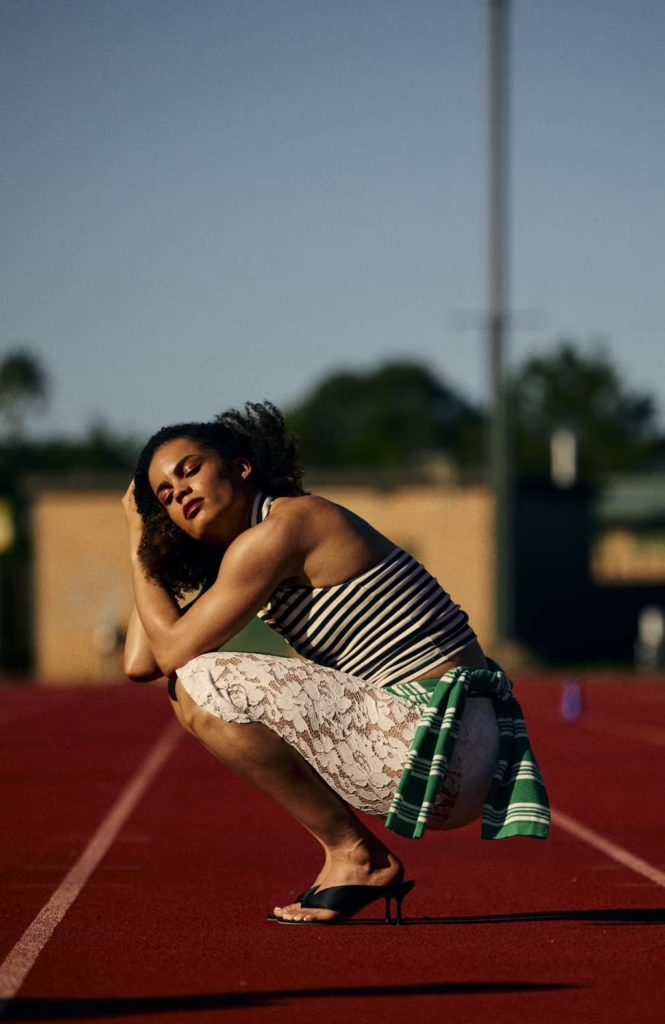
She’s come here solely for our photo shoot, but the way her “power-packed butt” (her first coach’s words, not ours) and ripped upper legs trampoline off the synthetic surface is rhythmical and light — a cadence crafted only with years of tuition and training.
A local woman well into the back nine of life gently smiles at the production unfolding as Torrie Lewis tilts her head slightly and trots along, surrendering to the beat of her AirPods. Younger men circle past us at a brisk jog, huffing; their feet hitting the track to a different tune altogether. A heavier sound.
Thump, thump, thump.
On the outskirts of the arena, a fellow bound for the adjacent baseball fields politely asks if he can grab a quick photo, craning his head high over the fence so she can take a selfie with him. “I’m a big fan. I love your work,” he gushes. Lewis’s work is something the like of which Australia has never seen before: the fastest woman to ever run over 100m.
Faster than Marjorie Jackson. Faster than Raelene Boyle. Faster than Cathy Freeman. Faster than Melinda Gainsford-Taylor. Faster than Sally Pearson.
Faster than all of them.
But on a sleepy afternoon as Joe Publics wander by and schoolkids file in after class is over for the day, this phenomenally unassuming athlete attracts just a few quizzical and curious glances as she shuffles through relentless costume changes for our photo shoot (“sick”, she enthuses on inspecting the work).
Can you imagine what it would be like if Gout Gout, Australia’s teenage phenomenon drawing comparisons to Usain Bolt, lobbed at a busy public athletics track one afternoon? Or his 100m rival Lachlan Kennedy? Middle distance queen Jess Hull? Or Olympic gold medal winning pole vault dynamo Nina Kennedy?
“It is pretty rare I get recognised, but sometimes I do,” Lewis shrugs. “If you asked me to pick money or fame, I’m always picking money. I would much rather be how I am now, not being recognised, walking down the street in a daggy outfit, than having everyone always with eyes on you.”

For the first time in a long time, Australian athletics is in vogue. The doyen of Australian sports broadcasting, Bruce McAvaney, is usually the best barometer when taking the pulse of many of Australia’s favourite pursuits. It’s put to him the sport appears, well, “cool” again.
“That’s spot on,” McAvaney enthuses. “In some ways (Lewis) wasn’t the beginning of it all but she was sort of the genesis of a few things that have happened since.”
A lot of the credit also needs to go to the freakish Gout and Kennedy, who are doing things in the men’s blue riband 100m and 200m no one could have forecast a few years ago. Hull, too, taking on the African stranglehold of middle distance running, while Nina Kennedy and high jumpers Nicola Olyslagers and Eleanor Patterson have been consistent medallists on the world stage for years.
But none of them is like Lewis, the English-born gymnast-turned-sprinter who migrated to Australia as a young girl to be raised by a single mother, a molecular scientist who could only fit her daughter out in Big W shoes when she started running seriously at state schoolgirl titles. Mum deserves her share of credit too, even if she doesn’t covet it.
The little schoolgirl with her trademark curly hair has now broken the allcomers Australian 100m record – twice.
“It’s crazy when you think about it,” Lewis, 21, says. “I can just go into a shopping centre and think, ‘Wow, I’m faster than everyone here’.” She certainly is.
Running in a lane adjacent to American superwoman Sha-Carri Richardson, Lewis clocked a blistering 11.08 seconds in a heat of last year’s World Championships in Tokyo. It lowered her previous national record by two-hundredths of a second when she shattered Melissa Breen’s decade-old mark in the 2024 national titles at Canberra. Lewis was just 19 at the time.
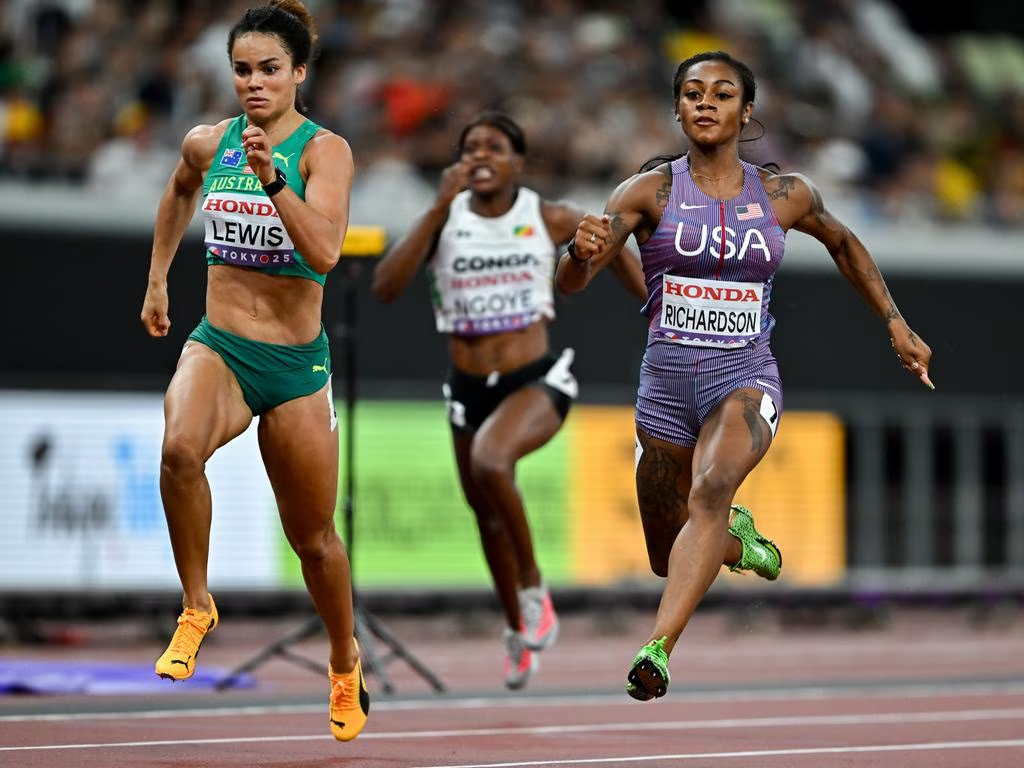
Her mother, Wendy, is usually a regular presence at Torrie’s competitions. She’s still grappling with missing Torrie break the Australian record for the first time when she had no expectations (she was focusing more on the 200m than the 100m). Wendy stayed at home watching the race from the couch talking to her dog, a little staffie Torrie used to take to training with her as she practised relentlessly at local athletics fields during the Covid pandemic lockdowns.
Wendy wondered: “Right, what are we going for, dog? Are we going for the junior record? Are we going for the senior record? Or are we going for an Olympic qualifier?”
“It took a second to sink in when the time came up,” she laughs now. It said 11.10 seconds. History. So, what does it mean to know your daughter is the fastest Australian woman ever?
“You’re going to make me cry,” Wendy says, her voice shaking. “I’m the emotional one. She doesn’t cry. I cry over everything.
“I don’t know how it makes me feel. Just watching her do what she’s doing and putting the work in and getting the rewards for it, I guess … I don’t know how I feel about it.
“There’s the pride, but I have to catch myself sometimes because for us it came on quietly. It was just progression. It almost didn’t feel like a huge deal.”
This month, Lewis will be a huge deal as one of the faces of Australia’s Commonwealth Games team in Glasgow, where she will join Lachlan Kennedy and Eddie Nketia in a sprinting revolution rapidly gathering pace (Gout was to skip the Commonwealth Games to focus on the World U20 Championships but injury has since ruled him out). For once, the attention on our runners will somewhat rival the focus on the anticipated gold rush in the pool from the swimming troupe. Lewis, whose growing profile has secured her an ambassadorship for the games with watch brand Longines, will have the chance to break her Australian record – again – with her biggest fan cheering her on from home.
Wendy Lewis is slumped on the side of the road, her eyes welling up because the bloody bus has left a minute before she got there. She has been in Australia for only a few weeks, and in the United Kingdom, when you miss one bus, another arrives.
Not here. Not on the other side of the world in the NSW coastal city of Newcastle, two hours north of Sydney. Weighed down by bags of groceries, library books, and anything else you can name, the thought of waiting another hour for the next bus has emotionally overwhelmed her.
Torrie catches the tears running down her mum’s face. I ask her what’s one of her most vivid childhood memories of her early time in Australia, and without hesitation she nominates the bus which never seemed like it would come.
“It will be alright, Mum,” six-year-old Torrie whispers to her mother. “It will be alright.”
The next bus eventually does come.
“At the time, I didn’t understand,” Torrie says. “I was like, ‘We can just wait for the next one’. But I understand how hard it was, and how frustrating it would have been for her back then. Now, I can really appreciate it. She didn’t know anyone in Australia. Australia has this rule if you want to rent a house, you have to view it first, you can’t just apply. Her boss actually had to view the house just so we could have a place when we moved here.
“Every year I live, I appreciate what she went through more and more, and what she did for me, her sacrifices. She’s the most important person in the world to me.”
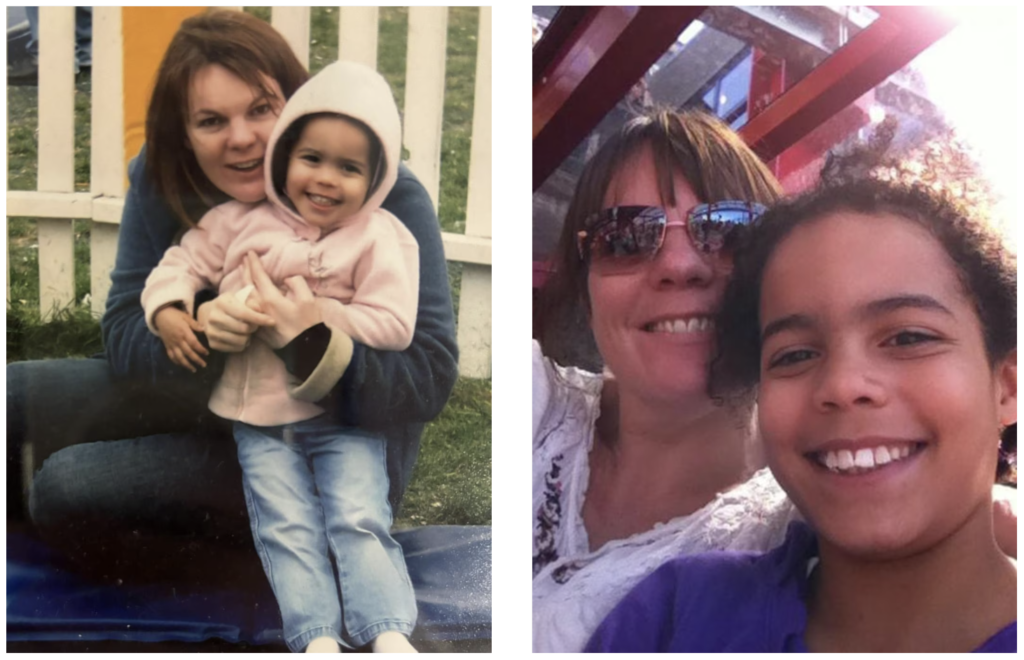
By her own admission, Wendy was never the maternal type – “kids weren’t in my life plan” – and grew up wanting to be a veterinarian after spending part of her teenage years working in a horse racing stable outside of Zurich, Switzerland.
Once Wendy reasoned veterinarian science was going to be difficult to study, she opted on science with a specialty in genetics. It was during a debilitating bout of tonsillitis in 2006, which forced her to take six weeks off work, that she started watching the Commonwealth Games in Melbourne. “They just kept raving about Australia and I thought, ‘Oh, maybe I can move there?’ It took me a while to get there, but that’s what started it,” Wendy says.
Torrie was only one at the time of the Melbourne Commonwealth Games, born to a father of Jamaican descent more than a week late (she was due on New Year’s Eve in 2004). Wendy would try to watch the athletics events from Melbourne while hoping her toddler would either sleep, or stay still.
“Torrie wanted to be up, out, she would stand on you, the feet were always going … and she was three months old,” Wendy laughs. “She was just over nine months when she started walking. Always, always moving. She never sat still. It was just full on.”
By the time a chance to move to Australia came with employment at John Hunter Hospital, advancing her work in molecular genetics, Wendy jumped in the deep end. She put a bunch of boxes on a boat which would take months to arrive, put Torrie on the plane and flew Down Under with little else to her name.
She found a rental property in Newcastle’s suburbs on one of her first days, and told the real estate agent they would take it there and then, only to be advised the carpets had been cleaned and were still wet. She could have the keys in a few days.
“I said, ‘no, I’ll take the keys now and we can figure it out. If you’re giving it to me, I can take the keys now’,” Wendy says. “I bought some duvets and blankets and literally slept on the kitchen floor for three nights because we had to keep off the carpet.
“I didn’t have friends, family or anyone here. We literally had nothing when we got here.”
Torrie’s adjustment to life in Australia was made easier by sport, namely gymnastics. She’d shown talent as a young child back in the United Kingdom at school holiday camps for both running and gymnastics, but excelled at the latter. It doubled as a useful vehicle for Wendy, too, because it burnt the bundles of energy Torrie possessed. Her training consisted of 20 hours per week, fitted in around schooling.
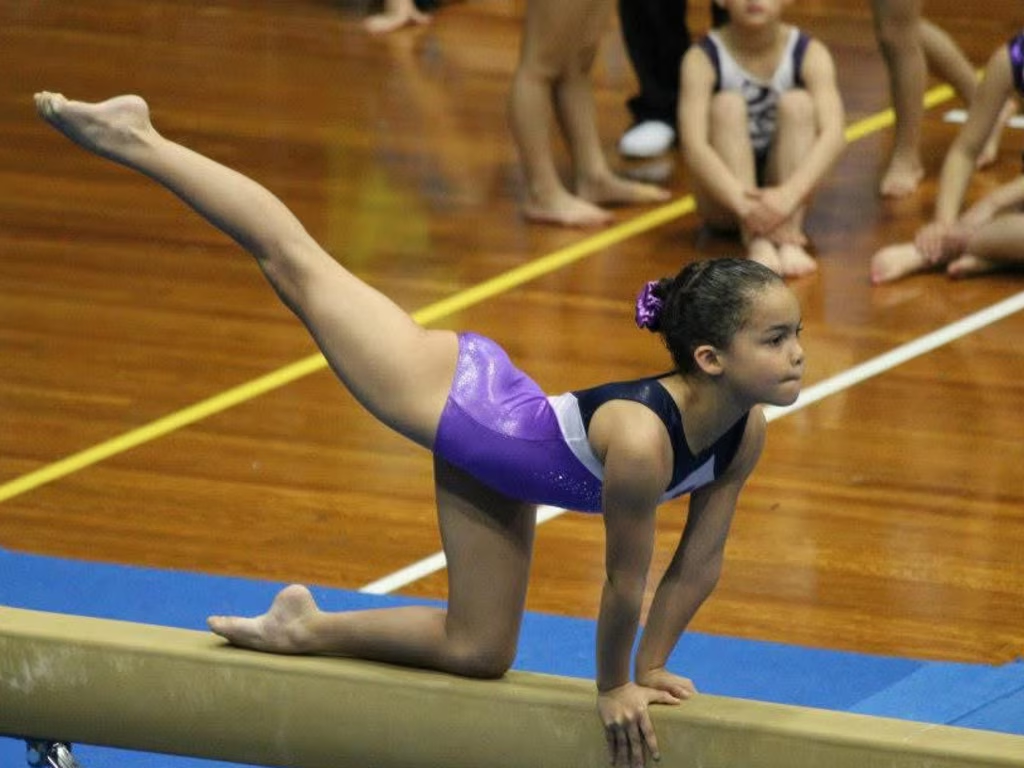
But by age 11, Torrie was drained. Getting out of bed was almost impossible. She took a break from gymnastics and Wendy consulted doctors to understand why her bright and bubbly daughter had suddenly lost all her zest for life. It took six months, but Torrie was eventually diagnosed with coeliac disease, which had ravaged her autoimmune system.
On the day of our interview, Lewis sits in the inner-Sydney offices of The Fordham Company, which has worked with a range of celebrity clients from NRL legends Andrew Johns and Ricky Stuart to history-making soccer manager Ange Postecoglou and businessman Mark Bouris, with a carefully curated bowl for lunch. Every athlete vets what they put in their mouth, but maybe none more so than Lewis.
“It can be nerve-racking, especially going to a country where they don’t speak English,” she says. “You’re not sure if they’re going to understand you. I actually bring camping meals with me to all competitions. I just need boiling water and it can activate the food.
“It’s so serious I can’t even use the same toaster or chopping board as someone else. If there are crumbs on a chopping board that have gluten and I put my food on it, that will make me sick. It’s quite sensitive.”
Once she finally understood her medical issues, there was never going to be a path back to gymnastics. Its loss was running’s gain as Lewis decided to make good on the promise she was showing at schoolgirl carnivals, making it to state finals with little more than a cheap pair of department store runners.
Every hidden gem needs someone to find them, and Lewis’s big break came at a Little Athletics camp near Coffs Harbour where a reluctant Queensland-based coach popped over the border and saw Torrie run for the first time.
Gerrard Keating was no slouch himself. He was an Australian 100m champion in the 1980s and qualified for the Commonwealth Games final in Brisbane in 1982. It’s fair to say he knows a decent runner when he sees one – and he knew what he’d seen when a coachless kid from Newcastle blazed down a lane at a Little A’s camp.
“She’s going to be the next big thing,” Keating told Wendy. “What do you mean? She’s only young,” Wendy told him. “I’m telling you, she’s going to be the next big thing. Here’s my number. I’ll start coaching her when she is 12.”
Keating made good on the promise, eventually packing up his own life and moving to Newcastle. He would relocate his own coaching business with one client: Torrie Lewis.
“Other coaches thought I was absolutely mad,” Keating says. “Why the hell would you move for a 12-year-old? I just knew. I can’t explain it, I just knew. I didn’t want her getting destroyed by another coach. That just happens too often. It’s the reason why I moved. I didn’t want it to happen to this little diamond I found.
“But I said to her mum, ‘we’re doing it this way, we’re not rushing it’. I didn’t even let her use the fancy new spikes they’ve got now until she was 17. We fought over that. But Wendy bought into it. She’s super intelligent. She totally got where I was coming from.
“Torrie doesn’t have to look far for an amazing, amazing role model.”
Gout Gout’s coach reckons the sound of the teenage freak’s feet pushing off a running track is like a pogo stick. It’s Di Sheppard’s harmony. Gout has the swagger, too, biting a gold cross necklace as he scorches down a running track.
If Gout learns anything from his new BFF, Olympic 100m gold medallist Noah Lyles, it’s sprinting is equal parts speed and showmanship. Lyles won the 100m Olympic Games title in Paris two years ago, whooping and hollering around the track, having spent all the pre race trying to get inside the minds of his rivals. In a sport where the margins are so fine (Lewis won the Australian 100m title last year by four thousandths of a second), any minuscule advantage can be crucial.
Speaking to Lewis for more than an hour, the stereotype of a brash, mouthy, egotistical sprinter couldn’t be further removed.
“She can look quite flamboyant, but that’s not her personality at all,” Wendy says.
Torrie riffs on how her latest interest has been studying cybersecurity (“it’s like another language, but one that runs our lives and we don’t even know about it”). She relentlessly educated herself on the Chinese language at school, with a secret desire to beat students who came from families with a Chinese background in her final high school exams.
Her ATAR was 95.2. She speaks about her resistance to regularly use social media, but also acknowledges it can leverage commercial opportunities too, so crucial in a cash-strapped sport like athletics. She seems ultra intelligent and just so … nice. Why is she so different to other sprinters? “It’s definitely more internal for me,” Lewis says.
I’ve always wondered what it would be like to be able to run fast, slicing through crisp, foggy air, every muscle and limb moving as one, a distant target coming into view quickly.
“It’s free,” Lewis says. “Whenever I get going full out, it’s free. It’s like a flow state. If you’re thinking about something, you’re not going as fast as you can. I’m really not thinking of anything. I’m just … free.”
But it’s clear her edge is more mental than anything. On the eve of the Covid pandemic, Lewis and Wendy had planned to leave Newcastle to start a new life in Brisbane. Keating drove a truck across the border to help them move, before returning to Newcastle to pack up his own possessions. After he crossed the Tweed, former Queensland Premier Annastacia Palaszczuk stopped travel between NSW and Queensland. Keating was stranded. He couldn’t return to Brisbane for months.
It might have broken lesser budding teenage athletes: no coach, no races to prepare for, no real direction or purpose. But Lewis dragged herself to local fields and kept training, just in case the sporting world revved up again.
“I emailed Athletics Australia and told them about her,” Keating says. “I said, ‘name me one senior athlete in this country that could have done that’. There is not one. Even though I already knew, that just absolutely rubber stamped it for me. This girl is going to go to the absolute top.”
So, what is her psychology actually like?
“If you’re going to be a champion sprinter, you need to have the delusional mindset that you can beat almost anyone,” Lewis says.
“I don’t care who you are, I’m going to beat you. In Australia, that was my attitude because I know I can win.”
Gout’s superpower has been his extraordinarily long Achilles tendons and stiff ankles, which allow him to spring from the track, generating superior power to his rivals. The back half of his sprint races, when he finally hits top gear, are viral nirvana. Lewis’s strength, Keating says, is her ability to hold her top speed longer than her rivals, meaning in time the 200m dash will be her pet event, rather than the blink-and-you-miss-it 100m.
“She’s always had that Ferrari-type body,” explains Keating, who no longer coaches Lewis after she moved to the Netherlands to train in the same group as Dutch world champion and Olympic gold medallist Femke Bol, but the pair maintain a close relationship.
“She’s mixed race and she has what I call a V8, the power-packed butt and that natural strength. She’s developing her body, but that’s going to take her a while to get used to.”
Lewis could not win another event in her life but she’d always have an honour most Australian runners would die for: crossing the line first in a race at the Olympic Games.
At just 19, Lewis won a repechage in the 200m at Paris. She’d only narrowly missed out on directly qualifying for the semi-finals through her heat. Exhausted but not overwhelmed, she eventually was run out of her first Games at the semi-finals stage.
A few weeks later, she was the second athlete across the line in the 200m final at the World U20 Championships in Peru. It took 18 months, but she was retrospectively awarded the gold medal after the winner, Adaejah Hodge from the British Virgin Islands, was suspended for doping. The news is only relatively fresh at the time of our interview, but Lewis is succinct in how she feels about it. She might have the gold medal, but she doesn’t have the memories, and that makes it hard to process. “It’s just bittersweet,” she says. “Of course I have the title now, but all of my memories of World Juniors are of seeing her cross the line before me.”
Lewis doesn’t even refer to Hodge by name. Will she want to contact her? “No,” she fires back. “Probably not. I don’t even have any photos of me to remember. I’ve kind of put it out of my mind now. It’s nice to say I have the title, but I don’t feel like I have it. All of my memories are a little bit tainted by it. It would have been a perfect year if I’d been able to celebrate that.” But it was another example, McAvaney says, of Lewis proving the bigger the occasion, the faster she runs. McAvaney has no doubt Lewis can be the first Australian woman to ever run sub 11 seconds for the 100m. It’s coming closer into view. But it’s what she’s done off the track which has really impressed him.
“She made a very decisive decision to leave Australia, to change her coaching situation, and she’s certainly proven she’s prepared to make big woman decisions for a pretty young person,” McAvaney says. “She could strut around in Brisbane, Sydney and Melbourne and be a pretty big deal in Australia. Yet she’s over there as someone who is probably pretty nondescript, and building what hopefully will be a very long and successful career.”
Says Keating: “She likes to win and she’s a bit of a perfectionist. Being so smart and intelligent, she can analyse it. You only have to tell her once. You put a brick wall 10m from the finishing line and she’ll run through it, whereas the majority will run around it.”
The mentality to run through a brick wall is needed by every young Australian sprinter on the runway to the Brisbane Olympic Games in 2032. Can you imagine Gout standing on the podium after the 100m or 200m final? Or Kennedy? Or the little girl raised by a single mother who never had a thought of representing anyone other than Australia, the country which now honours her as its fastest ever female runner, who wants to push the limits and see if she can run 10.something?
“It’s like you can almost see the journey: Paris, LA, Brisbane,” Lewis says. “It would be a storybook ending. I didn’t make the finals in Paris, LA I make the finals and come fifth (in 2028), and in Brisbane I win.
“That would be a perfect little journey.” It would. And it would also mean the next time she turns up at a local athletics track, there will be more than just one man on the other side of a wired fence asking for a selfie.
Styling: Jana Bartolo
With thanks to Puma; Longines; Scanlan Theodore; Deering; High Heel Jungle; Maui Jim; studio amelia; Maje; Sandro; alias mae.
Hair and Make Up: Nicola Johnson using YSL and Oribe